

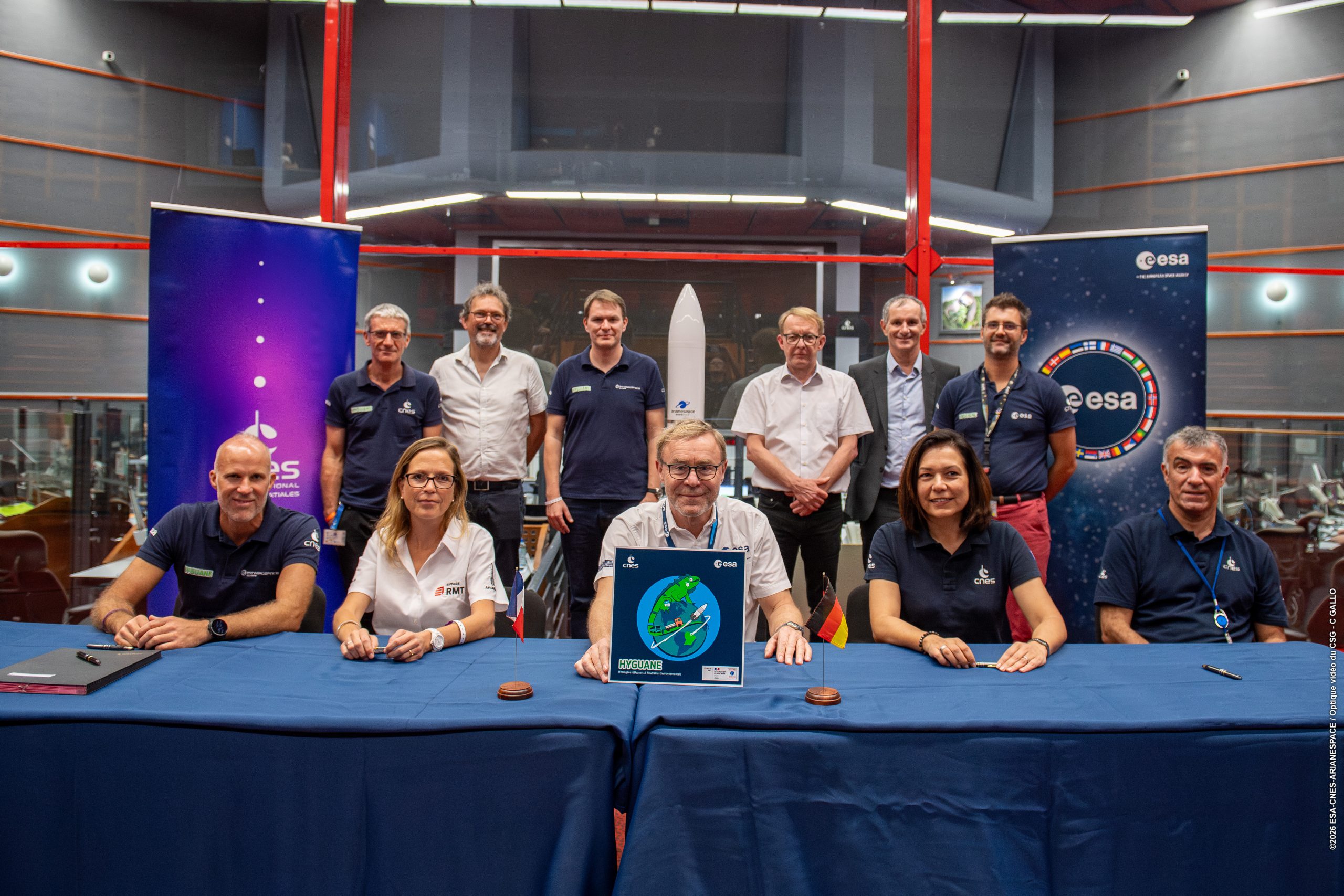
Caption of picture above: Front row, from left: MT Aerospace French Guiana Managing Director Michael Gärtner, RMT French Guiana Managing Director Nathalie Gouin, ESA’s Director of Space Transportation Toni Tolker-Nielsen, CNES’s Director of Space Transportation Carine Leveau, CNES’s Director of Europe’s Spaceport in French Guiana Philippe Lier A crucial contract for the Hyguane project was signed in the Jupiter ControlRoom at Europe’s Spaceport in French Guiana. The contract confirmed theconstruction of a 4.5 MWp solar power plant named PV3 (3rd photovoltaic – PV –field of the Spaceport) a key element in the project to supply low-carbonhydrogen for the spaceport. Caption: Signature ceremony in the Jupiter Room at Europe’s Spaceport in French Guiana HYGUANE Hyguane, an acronym that stands for ‘Environmentally Neutral GuyaneseHydrogen’ is an ambitious project led by the European Space Agency (ESA) withFrench space agency CNES and industrial and academic partners to develop alow-carbon hydrogen ecosystem at the Europe’s Spaceport in French Guiana.Julia Talamoni, energy transition engineer for the Hyguane project, explains,“The Hyguane project aims to produce low-carbon hydrogen to fuel Ariane 6.Currently, the hydrogen in use is produced in French Guiana from methanolsteam reforming. This process produces high amounts of carbon and requiressignificant external heat and methanol, making the spaceport dependent onexternal supply. The Hyguane project is therefore part of a broader initiative toreduce the carbon footprint of space activities and works towards strengtheningthe sovereignty and autonomy of European access to space.” For a low-carbonwater electrolysis of hydrogen, the electricity used needs to come from arenewable energy source. “The installation of the PV3 solar farm provides a low-carbon power supply to the water electrolyser, leading to the production of a“low-carbon molecule”, explains Julia.The pilot scheme of Hyguane will aim to produce 10 to 15% of Ariane 6 hydrogenneeds per year. Beyond this, the Hyguane ecosystem will provide hydrogen tofuel heavy vehicles in French Guiana for regional mobility and to produceenergy through hydrogen fuel cells, including electrical back-up of criticalinfrastructure systems at Europe’s Spaceport in case of black-out.HYGUANE Low-carbon hydrogen by 2026. The Hyguane ecosystem will be completed with the construction of a hydrogenrefuelling station and, pending funding from ESA Member States, a garage tomaintain hydrogen-powered vehicles.Work has already begun on a water electrolysis plant and a hydrogenconditioning centre used to compress and prepare the produced hydrogen fortransport, with works on the other elements of the project due to start in 2026.According to Teddy Peponnet, ESA’s Head of the Hyguane project, “The fullHYGUANE ecosystem will be commissioned by the second half of 2027, signingthe first low-carbon hydrogen-fuelled Ariane 6 ready to fly.” Hyguane, an acronym that stands for ‘Environmentally Neutral GuyaneseHydrogen’ is an ambitious project led by the European Space Agency (ESA) withFrench space agency CNES and industrial and academic partners to develop alow-carbon hydrogen ecosystem at the Europe’s Spaceport in French Guiana.Julia Talamoni, energy transition engineer for the Hyguane project, explains,“The Hyguane project aims to produce low-carbon hydrogen to fuel Ariane 6.Currently, the hydrogen in use is produced in French Guiana from methanolsteam reforming. This process produces high amounts of carbon and requiressignificant external heat and methanol, making the spaceport dependent onexternal supply. The Hyguane project is therefore part of a broader initiative toreduce the carbon footprint of space activities and works towards strengtheningthe sovereignty and autonomy of European access to space.” For a low-carbonwater electrolysis of hydrogen, the electricity used needs to come from arenewable energy source. “The installation of the PV3 solar farm provides a low-carbon power supply to the water electrolyser, leading to the production of a“low-carbon molecule”, explains Julia.The pilot scheme of Hyguane will aim to produce 10 to 15% of Ariane 6 hydrogenneeds per year. Beyond this, the Hyguane ecosystem will provide hydrogen tofuel heavy vehicles in French Guiana for regional mobility and to produceenergy through hydrogen fuel cells, including electrical back-up of criticalinfrastructure systems at Europe’s Spaceport in case of black-out.HYGUANE Low-carbon hydrogen by 2026. The Hyguane ecosystem will be completed with the construction of a hydrogenrefuelling station and, pending funding from ESA Member States, a garage tomaintain hydrogen-powered vehicles.Work has already begun on a water electrolysis plant and a hydrogenconditioning centre used to compress and prepare the produced hydrogen fortransport, with works on the other elements of the project due to start in 2026.According to Teddy Peponnet, ESA’s Head of the Hyguane project, “The fullHYGUANE ecosystem will be commissioned by the second half of 2027, signingthe first low-carbon hydrogen-fuelled Ariane 6 ready to fly.” Click here / ESA Space Transportation
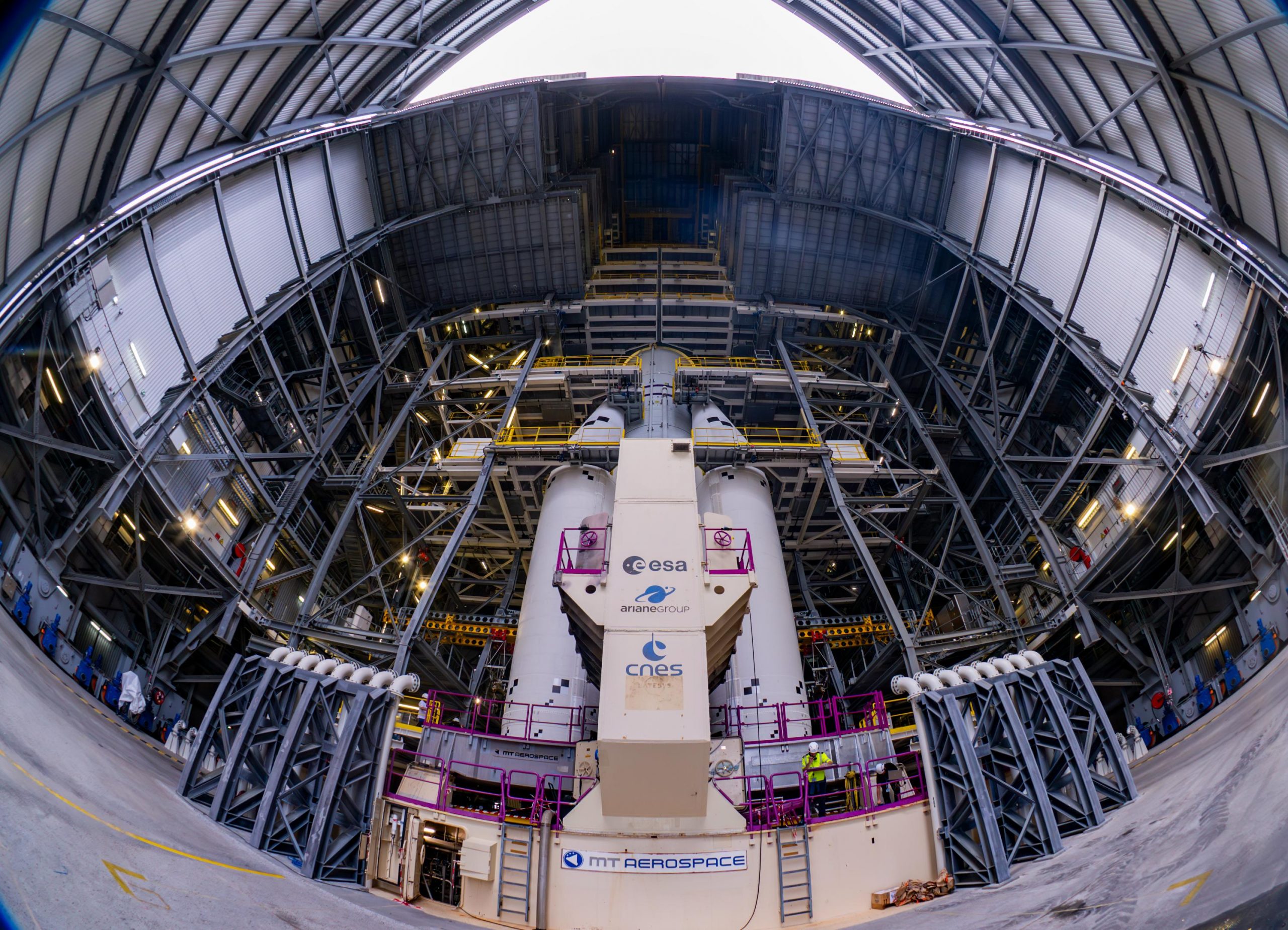
Ariane 6 four-booster A64 variant changes the game (VA267 launch in February)
On 12 February 2026, Ariane 6 lifted off from Kourou for the first time in its A64 configuration, marking a major new milestone for the European launcher after its inaugural flight in July 2024. Ariane 6’s sixth flight is no small feat. Thursday 12 February, Europe’s launcher lifted off for the first time in its most powerful A64 configuration. After five successful flights with the lower-thrust A62 variant from the Guiana Space Centre, this launch marks a ramp-up in lift capacity and launch rate, 18 months after its inaugural flight. VA267 MT-Aerospace Team witnessing the impressive launch in February of this year:
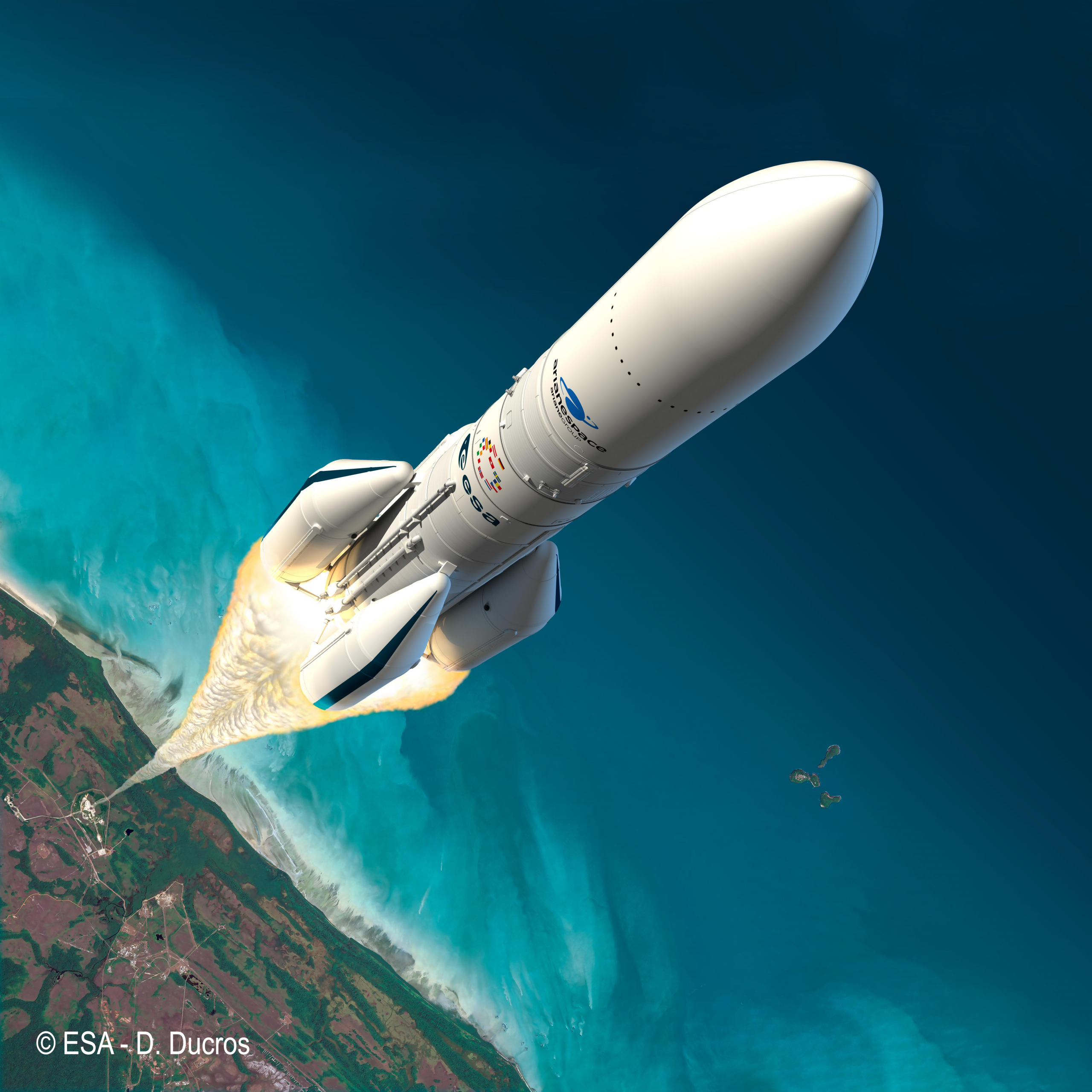
Ariane-6-Rocket to launch eight times in 2026
The European Ariane 6 launch vehicle is scheduled to fly into space up to eight times this year. “That represents a considerable increase for a large launch vehicle,” said Martin Sion, CEO of the aerospace company ArianeGroup, on Monday in Courbevoie, west of Paris. While this doubles the company’s number of flights into space, it still lags far behind its US competitor SpaceX. read the whole articel : Ariane-6-Rakete soll 2026 bis zu acht Mal starten | STERN.de
MT-Aerospace / Image Trailer
https://vimeo.com/1151660497?share=copy&fl=sv&fe=ci
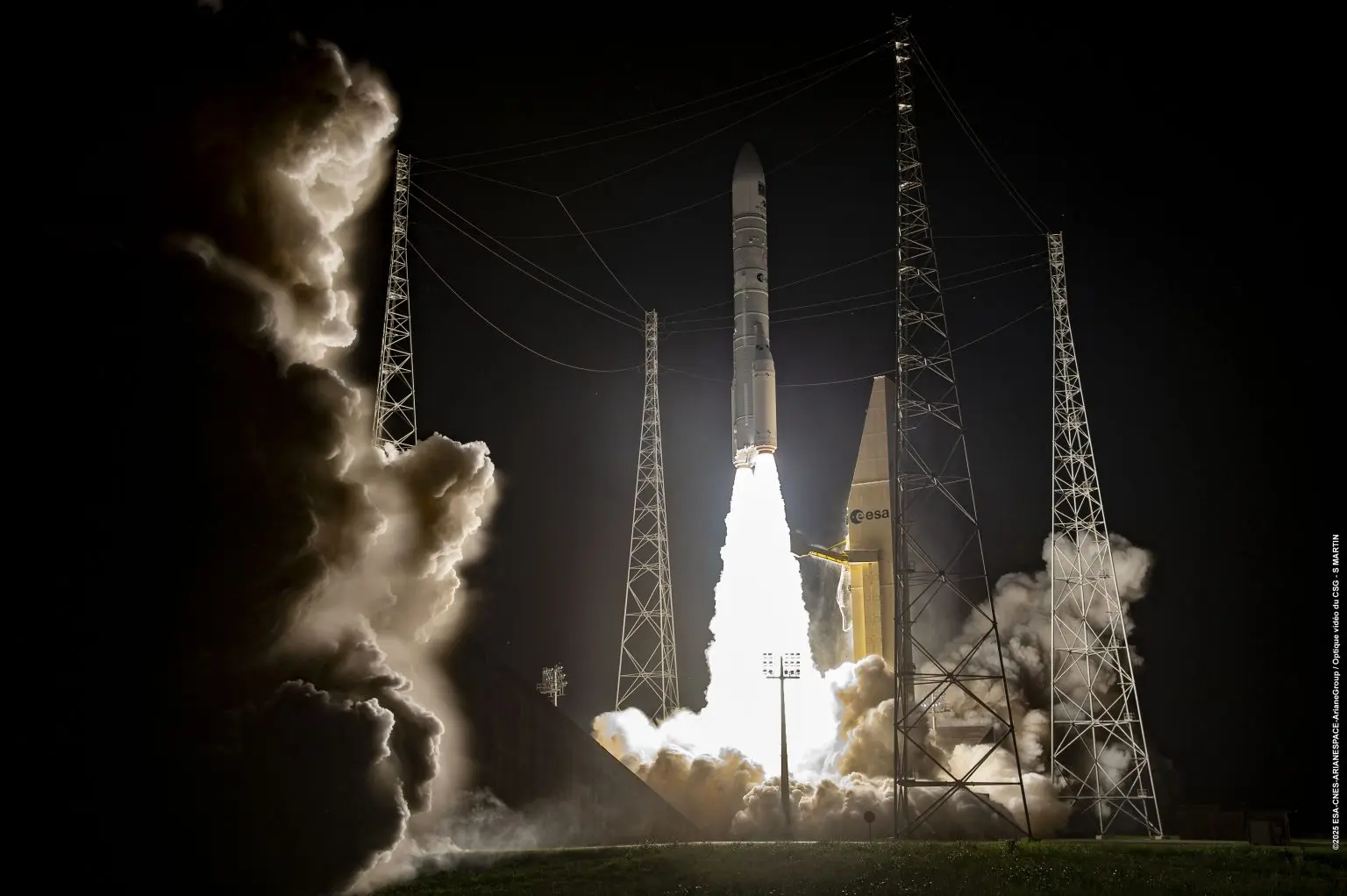
Ariane 6 – VA266 successful launch
Ariane 6 VA266 successful launch – last launch in 2025
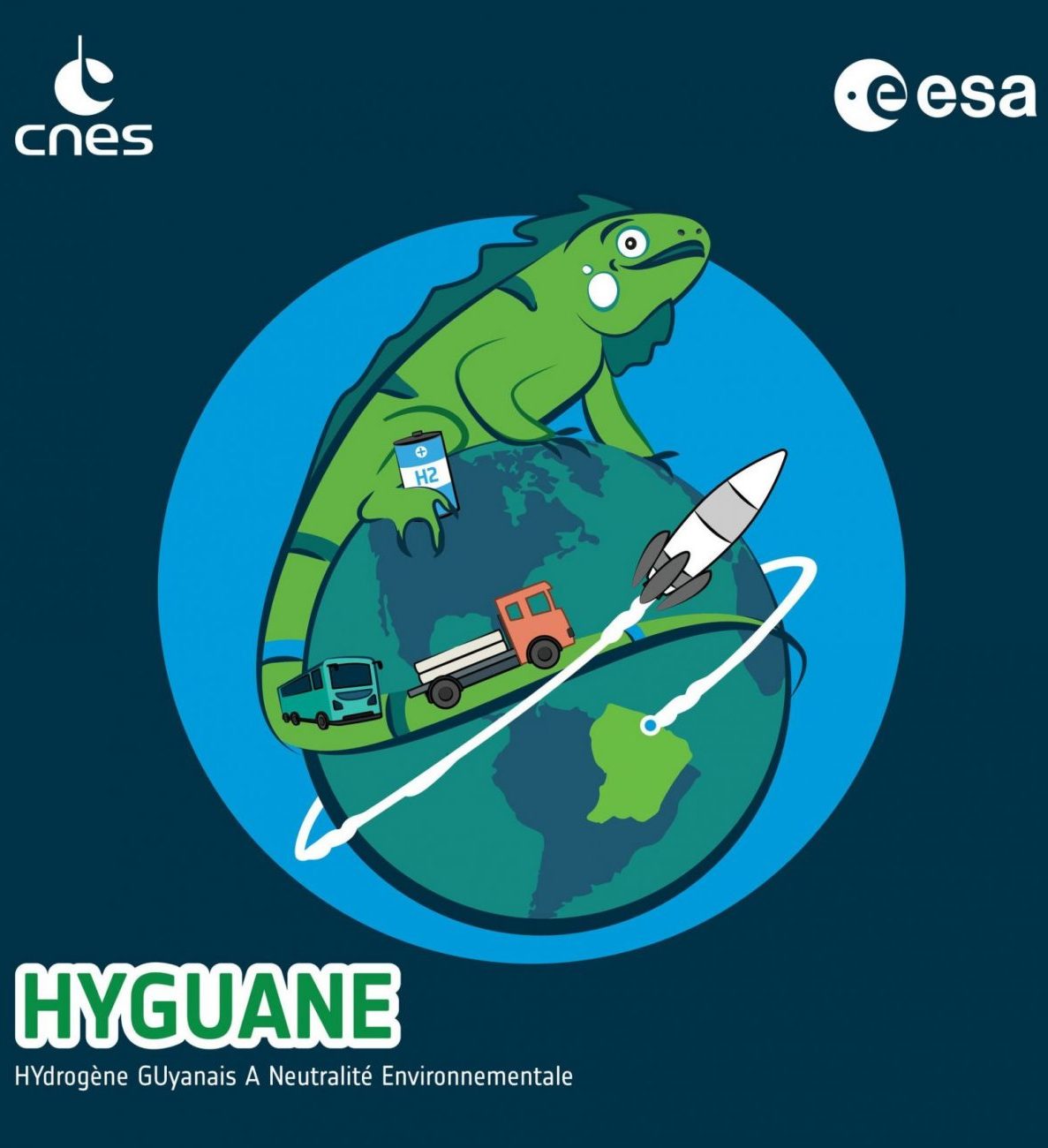
Hydrogen is the driver for future decarbonised mobility solutions
Hydrogen Competence Center – HYGUANE
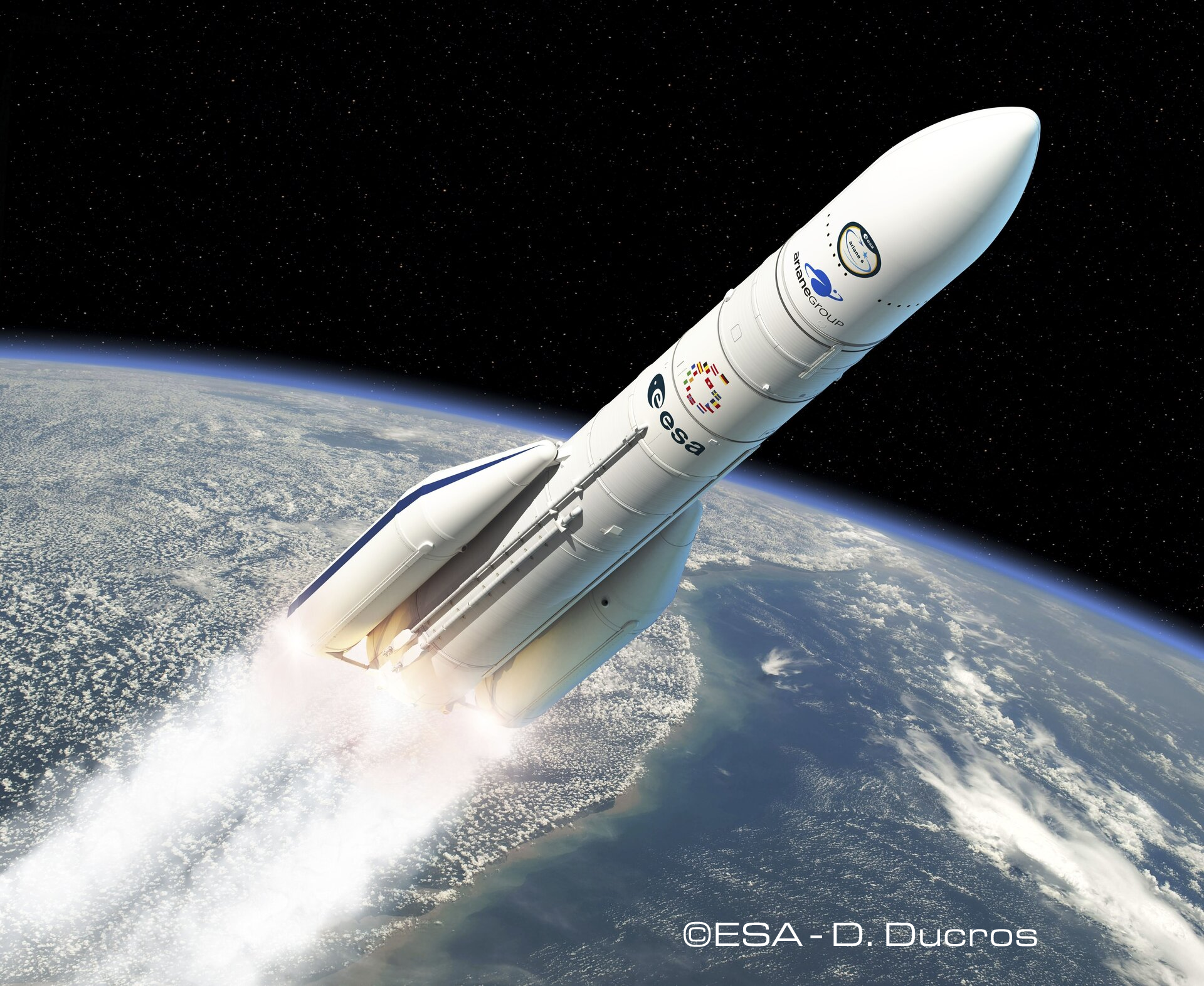
MT Aerospace AG receives order for structural parts for Rocket-Booster production for Ariane 6
MT Aerospace AG wurde am 25.09.2025 von ArianeGroup mit der Serienproduktion zentraler Strukturbauteile und Tanks der Flugmodelle 16 bis 42 für die europäische Trägerrakete Ariane 6 beauftragt. Die Vertragsunterzeichnung fand im Rahmen des Weltraumkongresses in Berlin statt.
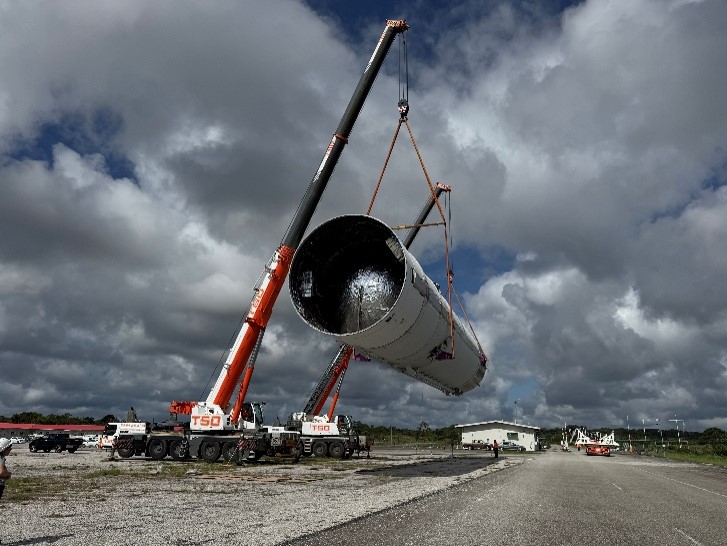
Interview with Director Michael Gärtner
Die Starttische und Anlagen auf dem Weltraumbahnhof Kourou sind eindrucksvoll. Sie müssen aber auch zu 100 Prozent verlässlich funktionieren. Und daran ist mit MT Aerospace Guyane ein deutsches Unternehmen maßgeblich beteiligt.